

Benedict’s Law came into force in England this September. It is named after Benedict Blythe, a five-year-old who died from anaphylaxis at school in 2021 after he was given cows’ milk despite a known allergy. The new statutory guidance, Allergy Safety in Schools, now sets out what schools must do to keep pupils with allergies safe.
For school kitchens, much of it comes down to doing the everyday things reliably. That means knowing which child has which allergy, serving the right meal every time and keeping clear records. One school trust, Extend Learning Academies Network (ELAN), has spent the past year doing exactly that with SchoolGrid. Their first year shows what strong allergen management can look like in a busy dining hall.
What Benedict’s Law asks of schools
The guidance applies to all local authority-maintained schools, academies and pupil referral units in England. Full planning and implementation must be in place by the end of December 2026. Schools are expected to:
- Publish a whole-school allergy policy and review it every year
- Provide annual allergy awareness and emergency response training for all relevant staff, including catering teams
- Keep spare adrenaline auto-injectors (AAIs) on site
- Make sure pupils with serious allergies have individual healthcare or action plans
- Consider school trips, PTA events, cake sales and other food activities on or off site
What it means in the kitchen
For caterers, the guidance is specific about the day-to-day. Kitchens should:
- Label every prepared item with its name, preparation and use-by dates, allergen information and any special dietary requirements
- Keep recipes current, check them for allergen risks and follow them consistently
- Follow strict food handling procedures to prevent cross-contamination
- Clearly label and separate meals for pupils with known allergies
- Make sure all catering staff can recognise anaphylaxis and know when and how to use an AAI
- Keep food safety and allergy management records to support compliance and audits
Extend Learning Academies Network put allergen management first
ELAN is an inclusive school trust with a high number of pupils with special educational needs and disabilities (SEND). When the trust moved from contract caterers to an in-house catering model, it had no meal management system of its own. Some schools had used a caterer’s digital platform while others still relied on paper.
The trust compared three providers. Pricing was similar across them, so the decision came down to what each system could do. Alex Crawley, catering operations manager at ELAN, explained what tipped the balance: “Because we are an inclusive trust and have a lot of SEND children, the allergen management side of it was the real winner.”
The timeline was tight. ELAN had a couple of months to set up before the summer break so it could go live on the first day of the new school year. With support from SchoolGrid’s go-live team, every school in the trust started the year on the same system.
From a wall of photos to the right meal at the counter
Before SchoolGrid, ELAN’s kitchens relied on what staff called the “wall of fame”. This was a display of pupils’ photos alongside their allergens. Displays like this rely on staff recognising familiar faces during a busy lunch service.
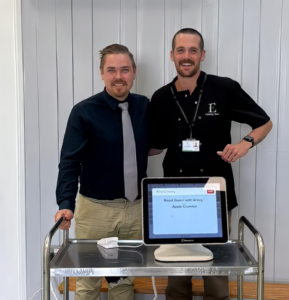
Now each pupil’s allergen information sits on one central system linked directly to them. “As soon as they press their name, it’s all up on the screen and the person serving knows what that child is going to have,” said Crawley.
That matters most when the usual team isn’t there. “Even if we put in an agency chef, they don’t have to search through a file of pictures. It’s all on there ready to go before and during service.”
Central records also give ELAN’s operations team direct oversight of every kitchen in the trust. They no longer need to visit each site to see how it is running.
Zero allergen-related incidents in year one
At the end of its first year, ELAN reported zero allergen-related incidents across the trust. The trust has recorded in its own reports that SchoolGrid was the right choice.
Parents have noticed the difference too. They can see the meal choices in advance and know exactly what is in each dish. “It gives parents with children who have allergies peace of mind,” said Crawley.
That confidence has fed through to uptake. ELAN has seen more pupils taking school meals than the year before, along with an increase in staff meals.
What other schools can take from ELAN’s first year
Benedict’s Law asks schools to make allergy safety part of how they run every day. ELAN’s experience points to a few habits that support that work in the kitchen:
- One source of truth. Keeping each pupil’s allergen information in one central place means everyone serving works from the same up-to-date details.
- Information at the point of service. When the right details appear as a pupil is served, the kitchen isn’t relying on memory or a folder of photos.
- Resilience when staff change. Agency and cover staff can see the same information as the regular team from the moment they start.
- Oversight across sites. Central records help catering leads spot issues across every kitchen without visiting in person.
- Clear communication with parents. When families can see what is in each meal, conversations about allergies start from shared information.
None of this replaces a school’s allergy policy, staff training or individual healthcare plans. It gives catering teams a more dependable way to carry them out at every service.
Looking ahead, ELAN plans to add SchoolGrid’s audit feature this year. “It’s much better than going to a school with my laptop and a Word document and trying to fill it in,” said Crawley.
Where to find the guidance
The government has published the statutory guidance alongside templates schools can use:
Free online allergy and anaphylaxis training for school staff is available from Allergy School and High Speed Training. Each session takes around 60 minutes.
For more information on how SchoolGrid can assist your school with allergen management, please contact james@schoolgrid.co.uk